


No — you do not need a website to sell online in South Africa in 2026. Many small businesses and entrepreneurs sell successfully every day on platforms like Takealot, Instagram, Facebook, and WhatsApp without owning a single web page. You can post products, chat with customers, send payment links through PayFast or similar tools, and ship items right away. This approach works well for thousands of starters in Johannesburg, Cape Town, Durban, Pretoria, and everywhere across South Africa.
But here is what most successful South African online sellers eventually discover: starting without a website is smart, but staying without one limits your growth in ways that become more painful the bigger your business gets. South Africa’s e-commerce market surpassed R130 billion in 2026 and continues climbing. The businesses capturing the largest share of that growth are the ones with their own websites — their own digital property that no platform can take away, no algorithm can suppress, and no competitor can outbid them for. Wenlinco helps South African businesses make that transition at exactly the right time, affordably and without technical stress.

How Selling Without a Website Works in South Africa
Selling without a website is genuinely easy to start in South Africa in 2026. The tools are free, the setup takes hours not weeks, and you can be taking orders the same day you decide to launch. Here is how most South African sellers operate without a website:
On Instagram and Facebook, you post high-quality photos or short videos of your products. Customers comment, send direct messages, or click a link in your bio. You respond, confirm the order, send a payment link, receive payment, and ship. This model works particularly well for fashion, beauty products, handmade crafts, food, and any product that photographs well. Sellers in Cape Town’s creative communities, Johannesburg’s fashion market, and Durban’s coastal lifestyle brands have built substantial businesses this way.
On Takealot, you list your products in an existing marketplace with built-in traffic and an established trust reputation. Customers find your products through Takealot’s own search engine and marketing. The platform handles payment processing and provides customer service infrastructure. Johannesburg sellers in particular use Takealot to reach customers across the entire country without managing their own logistics relationships.
Through WhatsApp Business, you build a catalogue, chat directly with customers, share payment links, and manage orders conversationally. WhatsApp Business is deeply embedded in South African commercial culture — customers trust it, use it daily, and feel comfortable purchasing through it. For service businesses in Pretoria, small product sellers in Durban, and personal service providers across the country, WhatsApp Business is a powerful low-cost sales tool.
Payment links through PayFast, Peach Payments, or Yoco allow you to accept secure payments from any customer anywhere in South Africa without a website. You generate a link, send it via WhatsApp or email, the customer clicks and pays, and you receive the money. This works for freelancers, tutors, service providers, and product sellers alike.
The Real Limits of Selling Without a Website

Every approach above has a ceiling — a point at which the limitations start costing you more than a website would have. Understanding where that ceiling is helps you plan your transition at exactly the right moment.
You do not own the platform. This is the most important and most underestimated risk in selling on social media or marketplaces. Instagram, Facebook, and TikTok can change their algorithms overnight and cut your organic reach by 80% without warning. Accounts get restricted, suspended, or permanently banned — sometimes for reasons the seller never fully understands. Takealot can change its fee structure, delist product categories, or prioritise competitors. Every rand you invest in building an audience or a product listing on someone else’s platform is rent, not ownership. Many South African sellers have lost businesses they spent years building because a single platform decision went against them.
Google cannot find you. The vast majority of South Africans searching for products and services use Google. Searches like “buy skincare online Johannesburg,” “affordable fashion Cape Town,” “handmade crafts Durban,” and “online grocery delivery Pretoria” represent enormous commercial intent — people actively looking to spend money. An Instagram page or Takealot listing has almost no presence in these searches. A well-built website with local SEO can capture this traffic consistently, turning search intent directly into sales without any advertising spend.
Manual work doesn’t scale. When you receive 5 orders a day through WhatsApp or Instagram DMs, you can manage the back-and-forth manually. When you receive 50 orders a day, the same process becomes overwhelming. Chasing payments, confirming orders, updating customers on shipping status, handling returns, and managing stock — all done manually through message threads — consumes hours that should be going into growing your business. A website automates most of this, handling orders, payments, confirmations, and stock updates without any manual intervention.
Trust has a ceiling on social media. Research consistently shows that 81% of shoppers check a business’s website before making a purchasing decision, especially for higher-value items. A social media profile, however well-maintained, has a trust ceiling that a professional website does not. For customers considering spending R500, R2,000, or R5,000 on a product or service, the absence of a dedicated website raises questions about legitimacy and professionalism that can cost you the sale.
When Is the Right Time to Build a Website?
There is no single right moment, but there are clear signals that tell you the time has come. You are ready for a website when you are spending more than 3 hours per day managing orders and customer messages manually. When your monthly sales through social media or marketplaces are consistent enough to justify the investment. When customers are asking “do you have a website?” — because that question signals that they want to trust you more than a social media profile allows them to. When you are losing sales to competitors who have websites and rank on Google. And when you want to grow from a side income into a serious, sustainable South African business.
The good news is that Wenlinco makes the transition affordable and straightforward. You do not have to choose between starting on social media and having a website — the best strategy in 2026 is to use both together, with your website as the foundation and your social media profiles driving traffic to it.
What a Website Adds That Social Media and Marketplaces Cannot
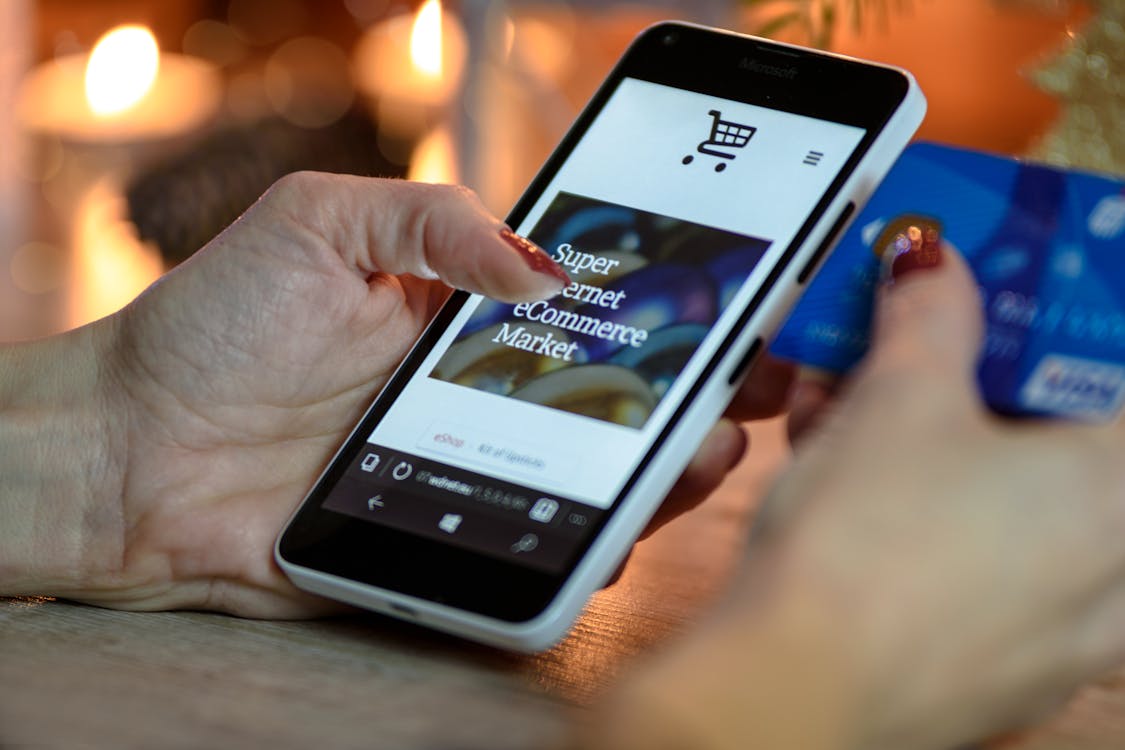
A website is the only digital asset your business truly owns. Everything else — your Instagram followers, your Takealot product listings, your Facebook page — is rented space on someone else’s platform. A website is yours. Here is what that ownership unlocks:
- Google search visibility: With proper local SEO, your website can appear in searches like “buy online South Africa,” “ecommerce store Johannesburg,” and “online shop Cape Town” — capturing customers who are actively looking to buy right now, without any advertising cost.
- Complete brand control: Your colours, your fonts, your story, your photography, your tone of voice — all presented exactly as you intend, with no platform aesthetic imposed on top.
- Automated sales 24/7: Customers browse, add to cart, pay, and receive order confirmations at 2am on a Sunday — all without any action from you. Your website works while you sleep.
- Customer data ownership: Every email address, every purchase history, every customer preference on your website belongs to you. On social platforms and marketplaces, that data belongs to them.
- Scalability without proportional effort: A website handles 5 orders the same way it handles 500. The infrastructure scales automatically as your business grows.
- Professional credibility: A well-designed website with clear policies, professional photography, and genuine customer reviews commands a level of trust that social media profiles simply cannot match for higher-value transactions.
Wenlinco Website Pricing Plans for South African Online Sellers
Wenlinco has structured our plans specifically for South African businesses at different stages of online growth. Every plan includes mobile-first design, SSL security, and local SEO foundations. For a detailed look at how website pricing works across different business types in South Africa, see our complete guide to website pricing in South Africa.
| BASIC SITE — R5,000 TO R10,000 | |
| Best For | Small business starters in Durban, Pretoria, or any South African city |
| Features | Simple product or service pages, contact form, local SEO basics, mobile-friendly |
| Ideal Transition Point | When social media sales are consistent and you want Google visibility |
| ECOMMERCE STARTER — R15,000 TO R25,000 | |
| Best For | Sellers moving from Instagram or WhatsApp to a full online store in Johannesburg or Cape Town |
| Features | Product catalogue, shopping cart, PayFast checkout, order management, mobile-first design |
| Ideal Transition Point | When manual order management is eating 3+ hours per day |
| GROWTH ECOMMERCE — R30,000+ | |
| Best For | Scaling businesses selling South Africa-wide or looking to dominate their category |
| Features | Advanced SEO, inventory automation, email marketing integration, analytics, ongoing support |
| Ideal Transition Point | When you are ready to compete seriously and capture maximum market share |
Real South African Businesses That Made the Switch
Fashion Seller in Cape Town — From Instagram to Full Online Store
A clothing seller in Cape Town built her initial business entirely through Instagram. In her first few months she made R50,000 — impressive results for a solo operation. But as orders grew, the manual work became unsustainable. She was spending hours each day responding to DMs, sending payment links, chasing payments, and updating customers on their orders. Sleep was suffering. Customer service was slipping. She built an e-commerce website with Wenlinco for R20,000, added local SEO targeting Cape Town fashion searches, and within 6 months her sales had grown 300%. More importantly, she reclaimed her time — the website handled orders automatically while she focused on sourcing, photography, and content creation.
Product Seller in Johannesburg — Combining Takealot With His Own Store
A Johannesburg seller who built a solid business on Takealot found that platform fees were consuming an increasing share of his margins as competition on the platform intensified. He added his own Wenlinco website alongside his Takealot presence, using the website to capture direct sales for his highest-margin products. Within 12 months, his direct website sales had grown to match his Takealot revenue — but at significantly higher profit margins because he kept the fees. His total profits doubled despite total sales growing by only 40%.
Handmade Crafts Business in Pretoria — WhatsApp to Website
A Pretoria crafter selling handmade homeware through WhatsApp groups was making steady sales but had hit a ceiling. Her customer base was limited to people already in her contact network. She built a Wenlinco website with product photography, local SEO targeting Pretoria homeware searches, and a simple checkout process. Within 4 months she was receiving orders from customers across Gauteng who had found her through Google — people who had never heard of her before but searched “handmade homeware Pretoria” and found her site on page 1.
| CAPE TOWN FASHION SELLER | |
| Website Investment | R20,000 |
| Sales Increase | 300% |
| ROI Achieved | Within 6 months |
| JOHANNESBURG PRODUCT SELLER | |
| Website Investment | R18,000 |
| Profit Increase | Doubled (same sales, lower fees) |
| ROI Achieved | Within 5 months |
| DURBAN SERVICE BUSINESS | |
| Website Investment | R15,000 |
| Sales Increase | 180% |
| ROI Achieved | Within 7 months |
| PRETORIA CRAFTS SELLER | |
| Website Investment | R20,000 |
| Sales Increase | 320% |
| ROI Achieved | Within 6 months |
The Best Strategy in 2026 — Social Media AND a Website Together

The most successful South African online sellers in 2026 are not choosing between social media and a website — they use both in a coordinated strategy where each channel strengthens the other. Social media builds awareness, community, and brand personality. Your website captures that interest, converts it into sales, builds long-term customer relationships, and gets found by new customers through Google who have never seen your social content.
Think of it this way. Your Instagram page is your shop window — colourful, engaging, constantly updated with new content that attracts passers-by. Your website is your actual store — where customers come in, browse everything at their own pace, make a purchase, and become a loyal repeat buyer. The window brings people to the store. The store makes the sale and builds the relationship. Neither is as powerful without the other.
As Jeff Bezos once put it, “Your margin is my opportunity.” Every rand you pay Takealot in fees, every sale you lose because a customer could not find your social media page on Google, every repeat buyer you lose because you have no email marketing — these are margins slipping away that a well-built website would keep in your pocket. Wenlinco builds websites that help South African sellers own their sales channel and maximise every rand of revenue they generate. Learn more about us at wenlinco.com/about.
Common Mistakes to Avoid When Building Your First South African E-Commerce Website
Many South African sellers who decide to build a website make avoidable mistakes that slow their results or waste their investment. Here are the most important ones to know before you start:
- Building a website before testing your product: If you have not yet confirmed that customers want your product and will pay for it, test on social media first. A website is an investment that rewards proven products — not a tool for testing whether your concept works.
- Relying on one platform entirely: Whether that is Instagram, Takealot, or your own website, dependence on a single sales channel is a business risk. The strongest South African online businesses in 2026 have multiple channels working together.
- Ignoring mobile: Over 70% of South African online shopping happens on smartphones. A website that is not perfectly optimised for mobile — fast loading, easy to navigate on a small screen, simple checkout — will lose the majority of its potential customers before they reach the payment page.
- No trust signals: A website without customer reviews, clear return policies, physical contact details, and professional photography will not convert visitors into buyers regardless of how well it ranks on Google. Trust must be built deliberately.
- Building without SEO from the start: A website with no SEO strategy is invisible to Google. Every page, every product description, every image filename should be built with search visibility in mind from day one — not retrofitted later at significant additional cost.
Answering Common Objections from South African Sellers
“Websites cost too much in South Africa in 2026.”
Wenlinco has plans starting from R5,000 — less than the monthly fee many sellers pay Takealot in commissions. When you calculate the cost of manual order management time, platform fees, and missed Google traffic, the real question is how much not having a website is costing you every month. Our pricing page breaks down exactly what each plan includes so you can make an informed decision.
“Social media is free and easy — why change what works?”
Social media is free today. It was also free for thousands of South African sellers whose accounts were restricted or whose reach dropped to near zero after algorithm changes they had no warning of and no control over. Free platforms are free because you are the product — your audience data belongs to them, not you. A website is the only digital asset you truly own, and that ownership has real commercial value that compounds over time.
“I sell locally in Durban — I don’t need to be on Google.”
Local SEO is one of the most powerful tools available for small businesses in Durban, Pretoria, Cape Town, and Johannesburg specifically because it targets buyers in your exact area. When a Durban customer searches “buy handmade jewellery Durban” or “online clothing store Umhlanga,” your website can appear on page 1 of Google for that search — bringing you a local customer who was actively looking to buy right now. Social media simply cannot capture this traffic.
“Takealot is enough for my e-commerce business in Pretoria.”
Takealot is an excellent starting point and remains a valuable channel for many sellers. But Takealot’s fee structure, increasing competition, and limited branding control mean that sellers who rely on it exclusively leave significant profit on the table. Adding your own website alongside Takealot — not instead of it — keeps your highest-margin sales direct while Takealot continues bringing discovery traffic. The best Pretoria e-commerce businesses in 2026 use both.
“I’m not technical enough to manage a website.”
Wenlinco handles everything — build, launch, SEO, maintenance, updates, and ongoing support. You do not need to understand code, hosting, or server management. You focus on your products, your customers, and your business growth. We focus on making sure your website performs at its best every single day. Contact us to find out how simple the process really is.
“My products are simple — a website won’t make a difference.”
The simplicity of a product has almost no relationship to the impact a website has on its sales. Simple products benefit enormously from detailed descriptions, multiple product photographs, size guides, customer reviews, and easy reordering — all of which a website delivers and social media and marketplaces cannot replicate well. The easier your products are to understand, the more important it is to differentiate on brand, trust, and buying experience — all of which a well-built website does better than any alternative.
“I can keep using payment links — I don’t need a full website.”
Payment links are a useful bridge but a poor long-term foundation. They require you to manually generate each link, send it to each customer individually, and track payments without any automation. They provide no product browsing experience, no brand building, and no Google visibility. As your order volume grows, the manual overhead of payment links becomes a growth bottleneck that costs you more in time than a website would cost in money.
Frequently Asked Questions
Do I need a website to sell online in South Africa in 2026?
No — not to start. Social media, WhatsApp, and marketplaces like Takealot allow you to begin selling with minimal cost and setup. But for serious, scalable, long-term growth with full ownership and Google visibility, a website becomes essential. Most successful South African sellers describe building a website as the single best business decision they made after validating their product on social media.
Can I sell successfully on Instagram without a website in South Africa?
Yes, many sellers in Johannesburg, Cape Town, Durban, and Pretoria generate significant revenue through Instagram alone. The limitations — platform dependency, manual operations, no Google traffic, and a trust ceiling — become more significant as your business grows. Instagram and a website work best together, not as alternatives.
Is Takealot better than having your own website?
Takealot provides immediate access to a large existing customer base and handles significant infrastructure. Your own website gives you higher margins, complete brand control, customer data ownership, and Google search visibility. The strongest South African e-commerce businesses in 2026 use both channels strategically rather than choosing one over the other.
How much does an e-commerce website cost in South Africa in 2026?
Wenlinco’s e-commerce plans start from R15,000 for a full online store with cart, secure payments, and mobile-first design. Basic business websites start from R5,000. Growth e-commerce packages for scaling businesses start from R30,000. Full details and what each plan includes are available at wenlinco.com/pricing.
What is the best way to start selling online in Durban?
Start by testing your product on Instagram, WhatsApp, or Facebook to confirm demand and build your first customer base. Once you have consistent monthly sales, invest in a Wenlinco website with local SEO targeting Durban suburb searches. This two-phase approach minimises early risk while building toward a sustainable, Google-visible business that you fully own.
Do small businesses in Pretoria really need a website for serious growth?
For any small business in Pretoria that wants to grow beyond their existing social media following and referral network, a website is the most important investment they can make. Local SEO for Pretoria suburb searches brings a consistent stream of new customers who are actively searching for exactly what you sell — customers your social media presence simply cannot reach.
Can I use WhatsApp Business instead of a website in South Africa?
WhatsApp Business is an excellent customer communication and order management tool, but it is not a substitute for a website. It has no Google visibility, limited product presentation, no automated checkout, and depends entirely on WhatsApp’s platform decisions. Use WhatsApp Business alongside your website — not instead of it.
Why choose Wenlinco for my South African e-commerce website?
Wenlinco combines affordable pricing, deep knowledge of South African local search behaviour, full ownership of everything we build for you, and genuine ongoing support. We are not a once-off website builder — we are your long-term digital growth partner. Our plans are designed for the specific realities of the South African market in 2026. Visit wenlinco.com/about to learn more about who we are and how we work.
How long does it take to build an e-commerce website with Wenlinco in Cape Town?
A standard e-commerce website typically takes 2 to 4 weeks from briefing to launch. Complex stores with large catalogues, custom integrations, or advanced features may take 6 to 8 weeks. Wenlinco works to agreed timelines and keeps you updated throughout the process so you always know exactly where your project stands.
Is mobile optimisation important for online sales in South Africa?
It is the single most important technical factor in 2026. The majority of South African online shopping happens on smartphones — particularly among the growing middle-class consumer base in Johannesburg, Cape Town, Durban, and Pretoria. Wenlinco builds every website mobile-first, meaning the phone experience is designed first and the desktop experience built from there. Google also uses mobile performance as a primary ranking signal, so mobile optimisation directly improves your search visibility.
What if I’m afraid of technology and don’t know where to start?
Wenlinco is built for exactly this situation. You do not need any technical knowledge whatsoever. You tell us about your business, your products, and your customers — we handle every technical decision, build everything for you, and provide ongoing support so you never have to figure out a technical problem alone. Contact us today for a free, no-pressure conversation about your business.
Do websites really bring more sales in Johannesburg?
Consistently, yes. Businesses in Johannesburg with well-built, well-optimised websites report significant increases in sales volume from Google search traffic — customers who found them through a search and would never have discovered them through social media alone. The high population density and competitive commercial environment in Johannesburg make Google visibility particularly valuable. Wenlinco’s Johannesburg clients regularly achieve 200% to 400% sales increases within 12 months of launching an optimised website.
How do I combine social media and a website for the best results?
Use social media to build awareness, community, and brand personality — post consistently, engage with followers, run targeted paid campaigns to reach new audiences. Use your website as the destination all of this activity points to — where customers can browse your full catalogue, make purchases, sign up for your email list, and become repeat buyers. Every piece of social content should drive traffic toward your website, not away from it. This combination delivers dramatically better results than either channel alone.
Ready to Own Your Online Future?
South Africa’s e-commerce market is growing fast. The sellers and businesses capturing the most of that growth are the ones who move from rented platforms to owned digital assets at the right time — early enough to build search authority while competitors are still relying entirely on social media and marketplace algorithms.
Start on social media. Test your product. Build your first customers. Then, when you are ready to grow seriously — when manual work is limiting your capacity, when you want Google to find you, when you want to stop paying platform fees on every sale — Wenlinco is here to build the website that takes your business to its next level. Affordable plans, full ownership, expert local SEO, and genuine ongoing support for South African businesses in Johannesburg, Cape Town, Durban, Pretoria, and everywhere in between.
Check our pricing plans, learn about us, or contact us today for a free consultation. Your online future starts with owning it.